

She’s Lost Control
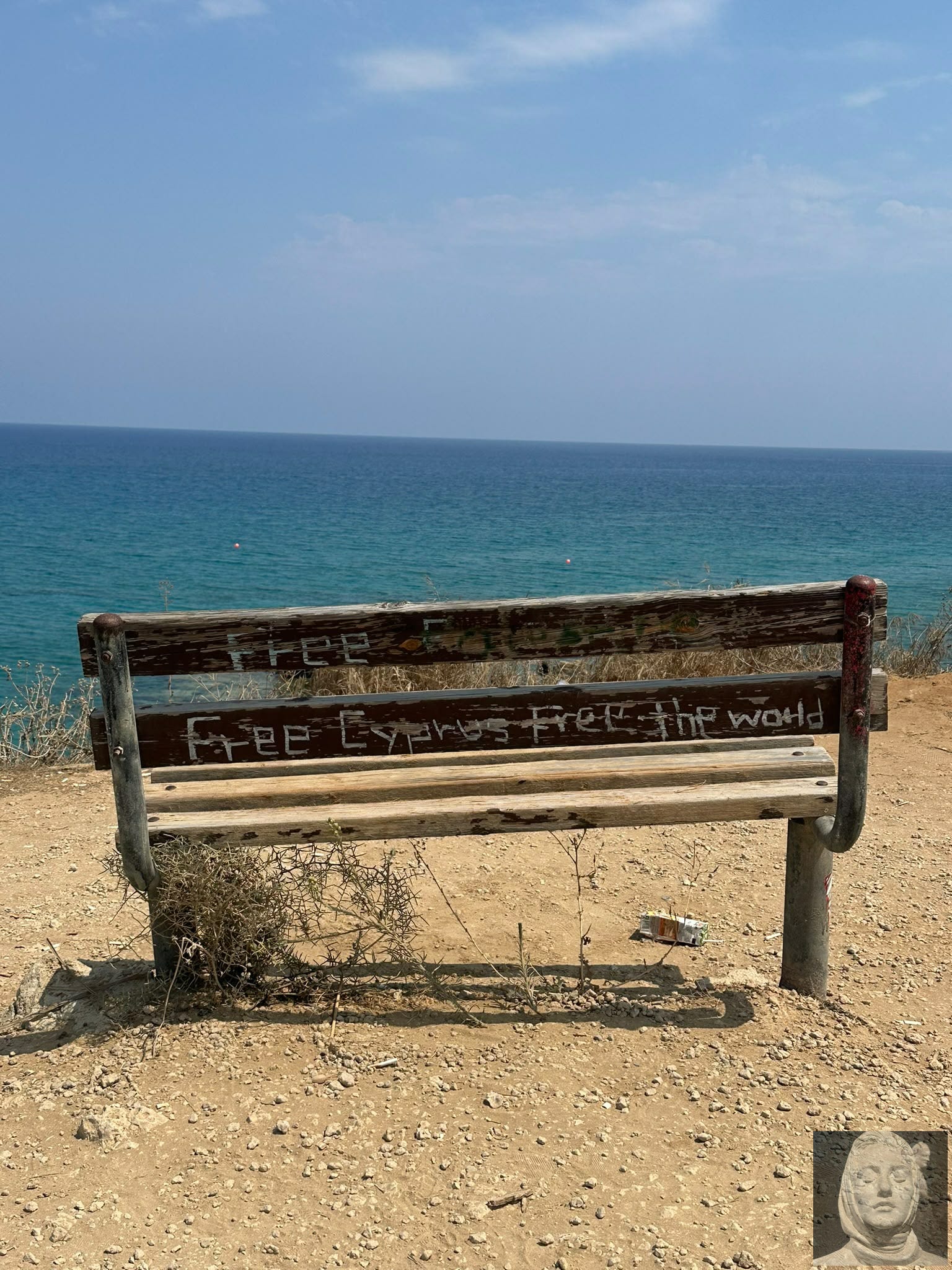
Cyprus is peacefully violent. Beautifully devastating. Silently screaming. Contradictions define Cyprus. A place with a distinct identity and even richer, unfathomably ancient culture — despite continuous occupation. Whether that occupier was Before Christ; Mycenaean and Hellenic, or closer to modern history, Venetian, Ottoman, British or Turkish — the genetics remain fascinating. In defiance of the wave of conquerors, studies show a foundational genetic baseline stemming from Neolithic Levantine populations. Even more so, the two main Cypriots “groups” today are so remarkably close to one another, it contradicts the politicised othering narrative: conveniently forgotten when we attempt to process our shared trauma. This pain is felt in the air, with a humidity that forces you to slow down, forces you to pay attention. The Mediterranean aura hits different here, it washes over your face when you leave the plane, yet lingers with a slow-releasing intoxication throughout the body. Is that a Lusignan Church or a Turkish Mosque? Is that an intentional art installation or painted oil drums to camouflage your pain? Does the jasmine smell different when grows through barbed wire?
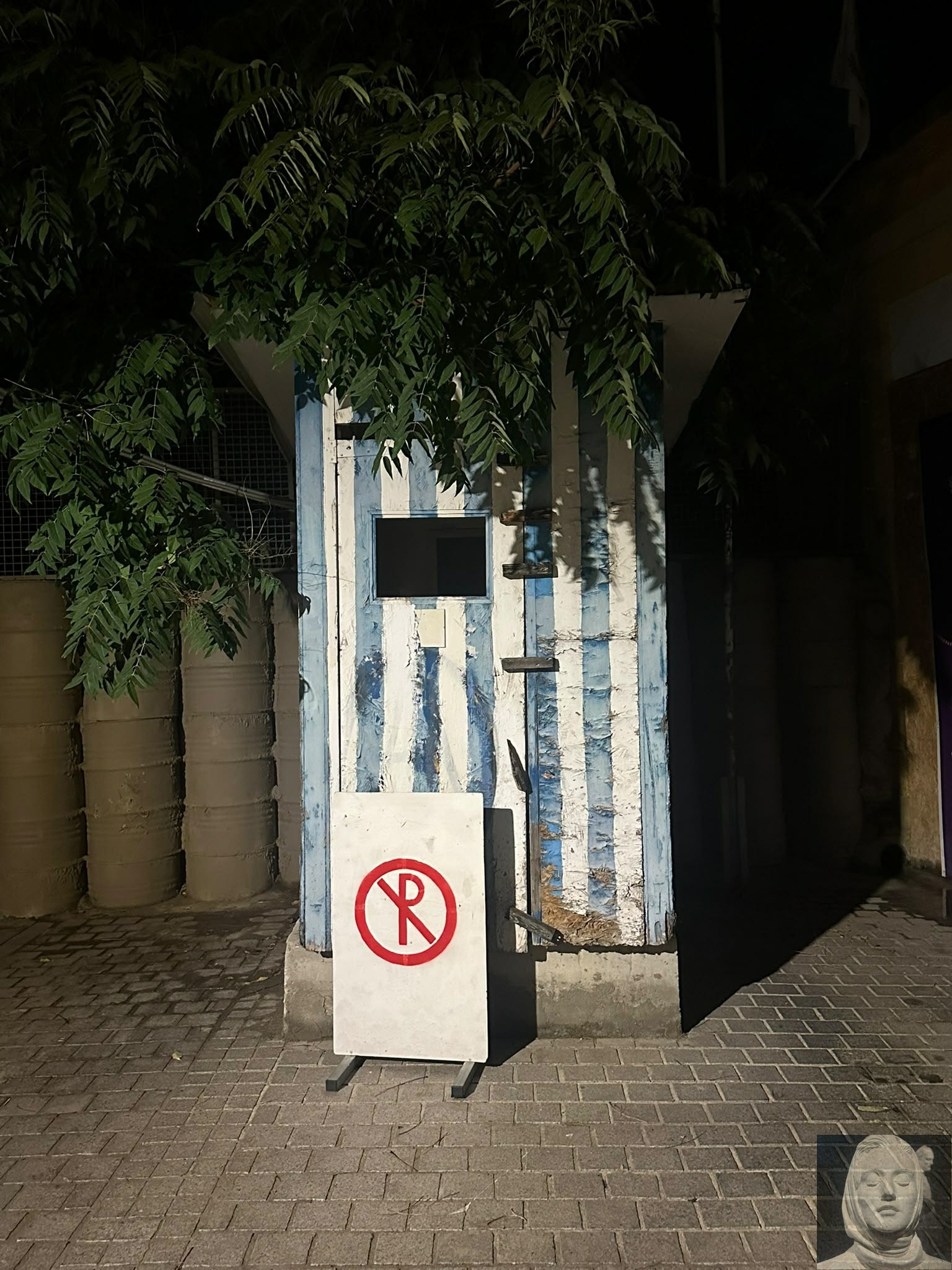
Nicosia. Not even cats roam freely here. Blocked by a border that feels so casual in physical magnitude — but psychologically and emotionally as heavy as the defensive mudbrick walls of the only divided capital city in the world. As you stroll through low-rise buildings and low tempo city life, you’d doubt the fact that this is the island’s most populous city. I always feel a welcomed lack of hustle and bustle here, the city feels comfortably cushioned and contained. If Nicosia was a person — she’d be cool, calm, and collected. Your nuanced artistic friend, who uses creativity to mask a deeper pain. On the surface, they seem content, loving the slow-paced life they feel like they’ve chosen, until you ask them “are you sure you’re okay?” Then the cracks begin to show. Her face spasms, her eyes seem to flicker. They’re an indecisive blue-green hybrid, like the colour of the oil barrel walls that softly stop visitors in their tracks. The schism she suppresses inflames her crow’s feet, a pain too visceral to think about daily, so it becomes a backdrop, lightly etched into her consciousness. She feels her lost potential, while despising the fetishisation of her lonely ghost town streets. She’s even madder at the travel influencers streaming these darkest parts of her soul as “beautiful urbanism”. She’s lost control of the narrative. Those pathways trace her deepest cuts, many still bleeding. Her scars are patchworked by ill-intentioned, over-zealous supposed friends who preach that they know how to best heal. What would I look like? What would I feel like? Who would I be if I wasn’t cut in half? As you walk through her, there’s an otherworldly sensation — she’s a people literally cut in half. A division that penetrates further than its visual birth in December 1963, for the seeds were sown long before that early Green Line. This othering is famously ~80 ~20 “Greek” and “Turkish”, or ~80 ~20 Christian and Muslim. The difference here is critical. The latter as an identity was always followed by the word Cypriot — whereas the former othering came before it. Cypriot first, not last — living and striving, side-by-side. Whether it was attending each other’s weddings or participating in heated battles of tavli (backgammon) in village squares: difference did not equate to wrong. Through my own primary research, I had a first-hand account of this togetherness, validated through one of Cyprus’ most endangered species.
Endangered but not extinct
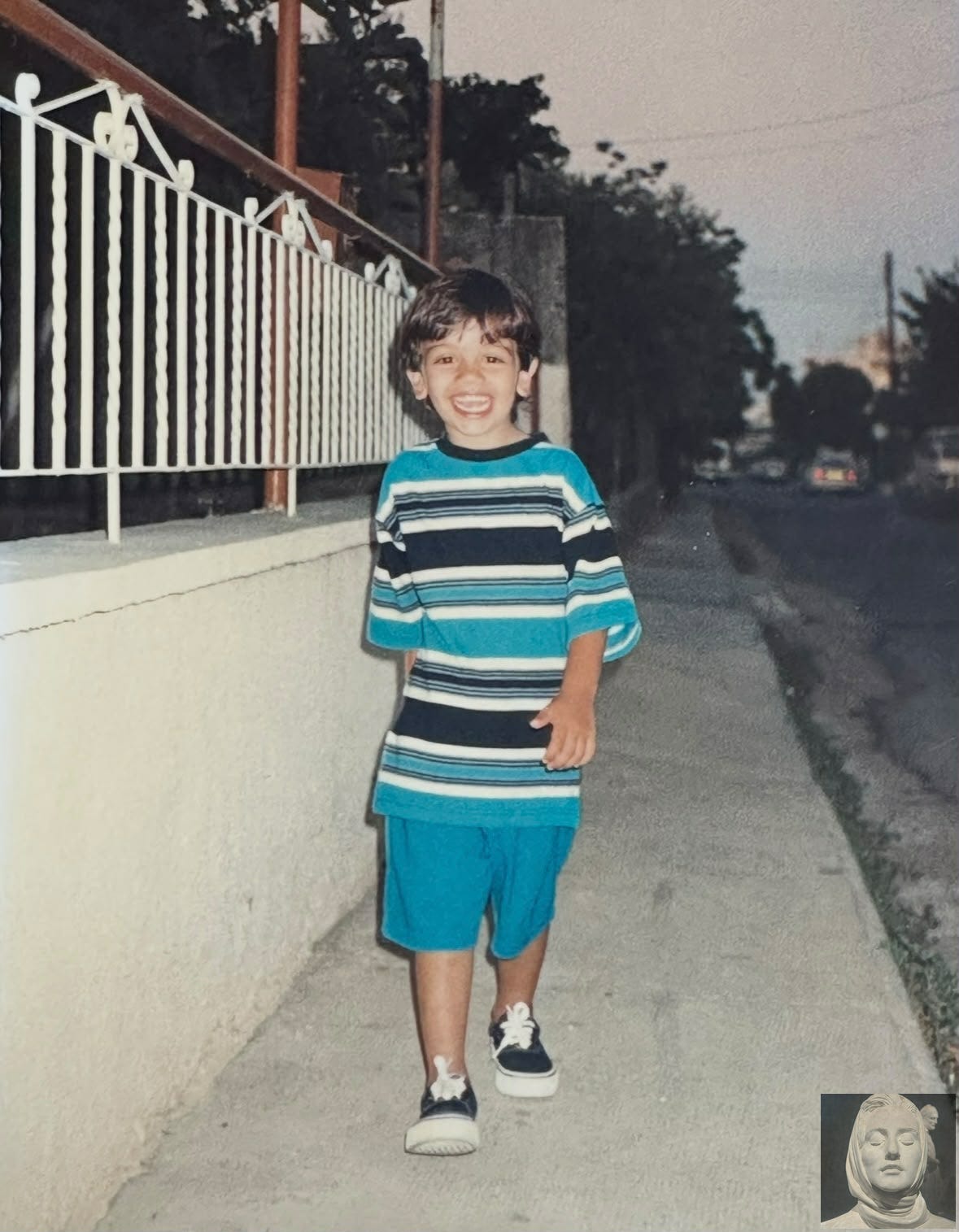
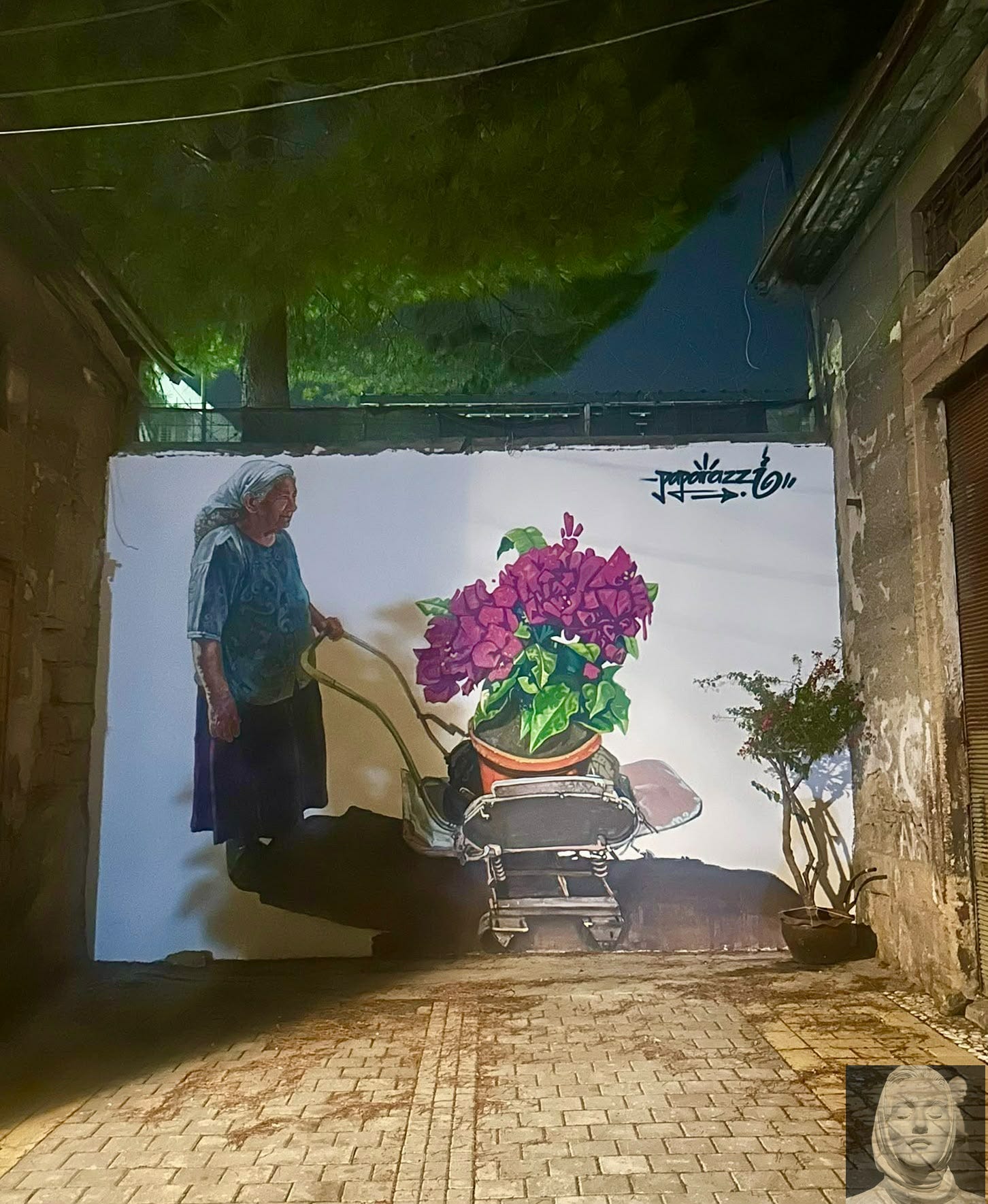
My γιαγιά (grandma) reminisced of a different world, of stories in her small mountain village during British Occupied Cyprus. To clarify, one-hundred-percent British Occupied Cyprus, in comparison with the official ~three-percent British Occupied Cyprus today; unofficially higher when you consider total land ownership. Her father, my great-grandfather, was a cobbler. However, 1930s Cyprus was shaped by deep rural poverty. Collectively, historians may argue this encouraged the October Events (1931 Cyprus riots). In turn, moving impatient peaceful diplomatic efforts for independence, to a militant anti-colonialism. For village dwellers merely trying to survive, an imagined de-occupied Cyprus did not change their daily material reality. This ancestor I never met, would regularly provide bread to their struggling Cypriot Muslim — or “Turkish Cypriot” neighbour, and vice-versa. An act so simple, in a story shared less and less — sadly dying with their protagonists. We need to cherish and document the wisdom of these endangered species. Imagination of the past, through stories from these first-person narrators, can be as — if not more — powerful than radical imagination for the future.
This poverty is hard to comprehend when you consider my privilege and opportunity a mere two generations later. Now 90 years wise, γιαγιά went from a family exchanging bread to survive in the mountains of Troodos, to a προξενιά (matchmade) marriage navigating her to the then still sooty post-Blitz housing stock of 1954 London. Eventually, she was led to seam stressing in the long-gone factories of Warren Street, which is where 64 years later her grandson began studying for a Master’s Degree on that very same street. Does generational trauma always lead to triumph? Does the pain of unearthing ancestral roots forever live in our souls? No matter how rich our routes — experiencing the depths of other cultures, seeing the beauty in different stories — your soul becomes a palimpsest. You can never really scrub the past. I could deep-dive here, with my scientifically informed, professional health innovation hat on, to explain the fascination of epigenetic heredity research. A phenomenon observed through generations of plants and animals — yet, science should not explain everything. Generational wisdom, not just trauma, is felt — and not rationalised. In a world obsessed with the explainable, where we find joy in certainty; there is a role for the unexplainable to be healing.
None of this potential altering of DNA annotation simply started in 1974, 1960, or even 1874 — probably the latter is the closest though. However, I’ve been rattling with questions since I got back from my first solo, queer passage through Cyprus: when does occupation become neighbourly? When does foreign influence become local culture? Is pain measured in the duration of years lived (χρόνος), or the depth in which they were felt (καιρός)? What is a “Cypriot”? Is it a direct descendant from neolithic settlers (the “original” kind), or bronze aged diggers from the ancient kingdom of Alashiya during antiquity times? I believe a Cypriot is neither. Instead, it is a person who hails from the land, and nourishes it. It is a person who respects history, and cherishes it. They love, grow, and tend to its flora and fauna. They breathe its thick air and smell its dusty streets with pride. They hear cicadas singing and it feels like home. They smell Arabian Jasmine (Foulli) and feel an ancestral protection. No British soldier, Turkish Settler, Greek Junta — or Israeli war criminal, will change that.
Queering the Line
Writing this from inside the occupation felt odd. For the contradictions run deep, casually crossing a walkable border using my dual-passport privilege is bewildering in itself. Moving from the “Greek” (Λευκωσία), to the “Turkish” (Lefkoşa) — side. The word side heightening anxiety. Yet the officers on both sides, always sit with a suspicious boredom. So acustomed to the everyday reality of Cypriots and tourists crossing casually into an illegal occupation. A double-edged sword for Greek-speaking Cypriots, who may cross with a hope to reconnect with their land, yet that healing is blocked. For being faced with such tantalising proximity — without being able to live, cherish and tend to their land — is an act of masochism. In turn, Turkish-speaking Cypriots cross into a legal sovereign nation with great trauma too. Remembering the forgotten decade, one that Hellenic-driven nationalists ignore, when their ancestors were forced into ethnic enclaves. Remembering stories of survival and slow dis-integration, fuelled by British, Greek, and Turkish agendas. Remembering early division, and forgetting the many loathes of bread. We lost the unity in hardship, a source of togetherness without expectation.
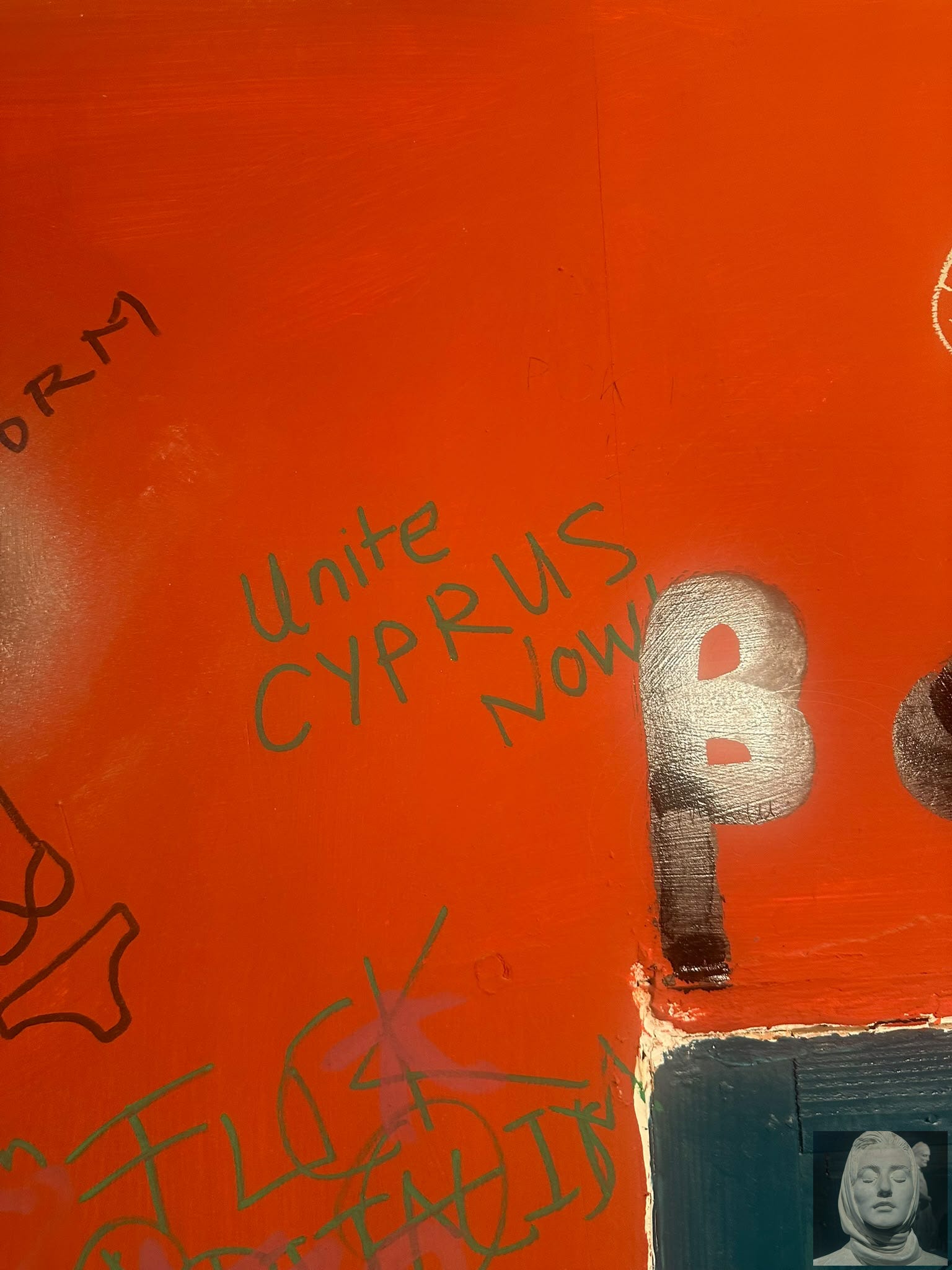
I was crossing that border for a different agenda: curiosity. For one of the capital’s most infamous (un)official queer bars sits a mere twenty-second stroll from the Ledra Street crossing, in a physical setting with an energy akin to romanticised fantasies of the Islamic Golden Age. Sipping my spicy margarita (bear with me for the accuracy of this analogy), I was protected by wide yellow-gold hued bricks and grand metals doorways. I then felt spiritually hugged with the call the prayer chanted rhythmically as a backdrop guiding my every conversation — which century am I in? Embodied in the square, you see a mix of queer, queer-adjacent, and likely queer-inspired aesthetics; expressed with a calming creativity. Performance and intentional coolness is absent. Maybe the lack of officiality means creation doesn’t try to be more than it needs to it here. It can just exist in the vacuum of time that epitomises Occupied Nicosia. Does queerness heal trauma? “Unite Cyprus Now”, “Free Palestine”, “Cyprus for Cypriots” haphazardly decorates the window of the bar. I ignored the odd “Federal” between “United” and “Cyprus” — as federalism is not unity. Yet, the window is so gloriously yet perfectly messy, as if every piece of text was carefully positioned with intent, and not slapped on by passionate guests.
I was at Hoi Polloi bar, meaning “the many” in Ancient Greek, in a building created back in the 1830s. I tried to channel myself back to this period, with facts seeding my imagination. Just over a decade earlier from the structure’s inception, the Ottoman governor had mass executed 434 Cypriot Christians, including the head of the Church of Cyprus — publicly hanged from a tree in Nicosia. Was that tree still here? Was is a Cypress, or a Calabrian pine? Or was it a fig tree? Maybe a relative to the fig tree that grew out of Ahmet Hergüne’s stomach in June 1974. A Cypriot massacred during the atrocities that created the permanent division we see daily. Cypriots killing Cypriots - Greek speakers killing Turkish speakers, Turkish speakers killing Greek speakers, as well as Greek speakers killing Greek speakers; and Turkish speakers killing Turkish speakers. As of the 31st of August, 2026 — there are 1,510 on the Greek-speaking official missing-persons list; 765 identified, 745 still missing. And there are 492 Turkish-speaking missing-persons too; 317 identified, 175 still missing. This spans the 1963-64 intercommunal violence, and the invasion(s) of 1974. Seeing these numbers so plainly, it feels soulless to state them without names and without their families (of whom remain) — to tell us their stories, to tell us their roots and routes.
The reality is, Cypriot trauma is as ancient as its copper. And its people suffer the most. Forever a geopolitical pawn, a prize to be claimed — or gifted, whether that be to Cleopatra (twice), or to Richard the “Lionheart’s” wife. Why are the conquerers celebrated as brave, while those who resist the conquering labelled as terrorists? A tale as old as time, the categorisation of these fighters, forever underpinned by the pendulum of power. I started to contemplate, surrounded by what felt like an oasis of creative energy and cultural capital in the centre of Nicosia — what makes and break a society?
Creative, coordinated collectives
Do societies rise together in creativity, and collapse apart in control? I feel the urge — not just in Cyprus — but globally, for creativity to help us rebuild our societies. Cyprus is unique, not because 98% of my DNA hails from there (according to technically - very unreliable and unethical - data collection) — but because it sits at the crossroads of so much unimaginable history. With many more stories to be written, I couldn’t help but wonder (not if I was the Cypriot Carrie Bradshaw), but if Cyprus could resist occupation through creativity? Not only in its literal form, we can be creative about the definition of creativity. As politicians of the old world die out, democracy shows more cracks, and apocalyptic thinking feels like everyday speak — where is the radical imagination for the future? Hope is all we have. Fighting the norm — a literal definition of queerness, while remembering our collective histories, is a path we’re afraid to fully embrace. As I conjured up the aroma of Foulli (Arabian Jasmine), I could feel my ancestors calling me. The humidity did hit less, yet the jasmine never stop blooming.
Beautiful piece Christian! I made the crossing in Nicosia between the two sides of the city as a young child and have such strong memories of the walk down the abandoned street, the oil cans and the barbed wire. I was so affected by it.
I really enjoyed reading this piece
It is interesting and engaging .It really draws the reader in leaving you thinking about it afterwards . Well done